Mongolia tours with free WiFi during your trip – leave it to a local specialist travel company.

Contact us for advice and quotes on local Mongolia toursEmail:info@nomadmongolia.com

Bayan-Ulgii and Ulgii Tour




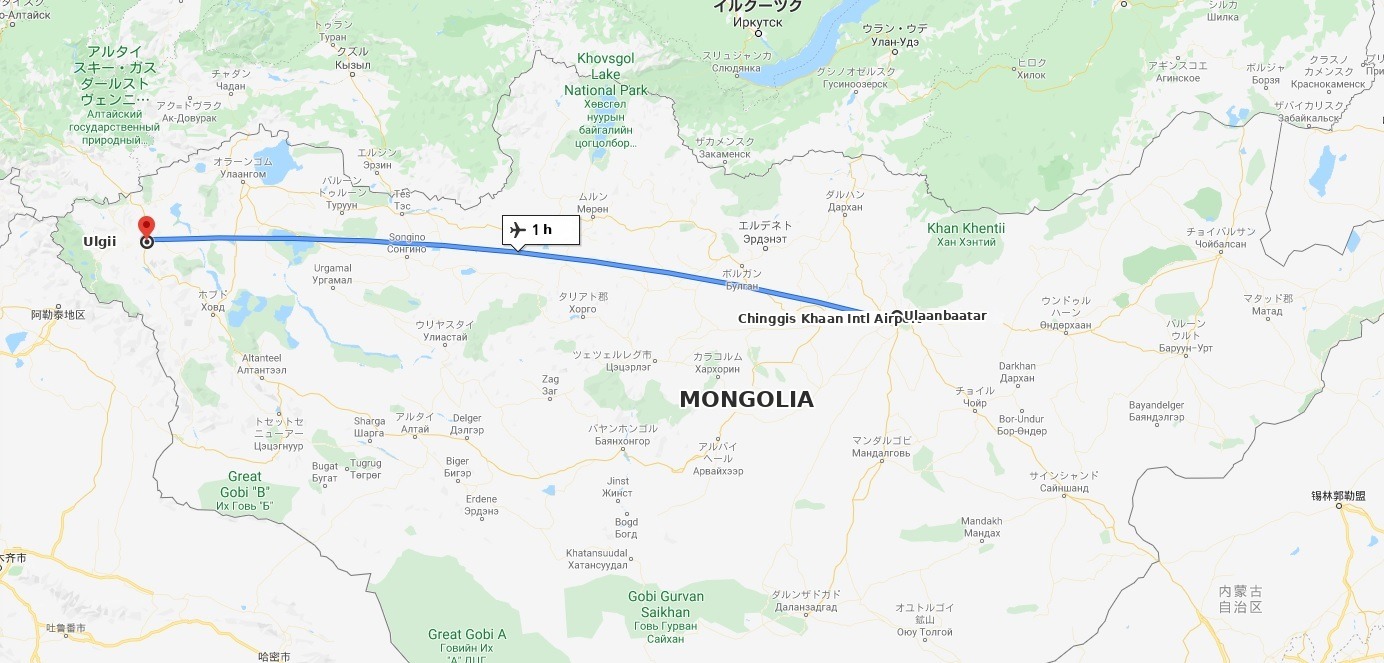
Bayan-Ulgii Province lies in the westernmost part of Mongolia, bordering China's Xinjiang Uyghur Autonomous Region to the south and Russia's Altai Republic to the north. To the west it is close to Kazakhstan. The province covers 45,700 square kilometers. Its altitude varies greatly by place, from 1,301 to 4,374 m. 95.3% of the province is above 1,600 m, so overall it is at a very high elevation. The whole province can be said to lie within the Altai Mountains, with peaks covered by permanent snow and glaciers visible everywhere.
The average annual precipitation of Bayan-Ulgii is very low at 102.6 mm, and it is very dry. Yet while the air is dry, Bayan-Ulgii has the strange environment of holding abundant water resources. This is closely related to the environment in the Altai Mountains.
Average annual precipitation in the Altai Mountains is 400–500 mm, very high compared with the province as a whole. In the Altai, the land is dry and hard, the mountains have very few trees and there are many rocky hills, and under these various conditions rain and snowmelt run off immediately. The water that flows out forms rivers in various places and lakes in low places. In Bayan-Ulgii you can see very clear, beautiful rivers and lakes.
* Prices, times, number of services and opening hours shown are guidelines. They may change, so please ask us for the latest information.
Detailed Guide to Ulgii (Өлгий)
| Meaning of the name | "Cradle" |
|---|---|
| Position | Capital of Bayan-Ulgii Province (became a city in 1961) |
| Altitude and climate | A highland at 1,710 m. Very dry, but the water-rich Khovd River flows through the city. The average annual high is about 7°C, and even in the hottest month, July, it is a cool 22°C. |
| Population | About 30,000. About 90% of them are Kazakhs. Signs in the city are more often in Kazakh than Mongolian. |
| Time difference from Ulaanbaatar | Minus 1 hour |
| By air | From Ulaanbaatar, Aero Mongolia flies 2–6 times a week and MIAT Mongolian Airlines twice a week. About 2 hours. 476,850–502,150 Tg. |
| Long-distance bus | From the New Dragon long-distance bus terminal in Ulaanbaatar, departs at 13:00 Tuesday to Friday (and also at 10:00 on Monday, Wednesday and Saturday). About 30 hours, 130,000 Tg. |
| From Ulgii | To Ulaanbaatar: departs at the same time from beside the theater southwest of the square. To Khovd: shared jeeps and minibuses leave from the parking lot before the zakh (market). They depart when passengers gather, about 5 hours, from 50,000 Tg. |
Overview of the town
In 1932, Prime Minister Genden visited and proposed creating an administrative region for Kazakhs who live while preserving their traditional culture. Bayan-Ulgii Province was established in August 1940. Though very dry in the Altai Mountains, the water-rich Khovd River flows through the city.
Getting around Ulgii
Mud walls and houses of dried brick are scattered about, and most people in town are Kazakhs, with distinctive clothing. At the zakh (market) in particular you will see many goods not seen elsewhere in Mongolia. In Kazakh it is called a bazaar. The museum, bazaar, souvenir shops, mosque and restaurants are grouped near the provincial office.
Bayan-Ulgii Provincial Museum (Баян-Өлгий аймгийн музей)
To learn about the Kazakh people. The first floor exhibits animals, plants and underground resources, the second floor history, and the third floor folk materials such as Kazakh and Uriankhai costumes, household tools and musical instruments. You can see the cultural differences between Mongol and Kazakh nomads at a glance, and the displays of the traditional Kazakh ui (house in Kazakh is "ui") and ger are well worth seeing.
| Location | East side of the square |
|---|---|
| Opening | 8:30–17:30 (9:00–17:00 in winter), closed Sundays (Saturdays and Sundays in winter). Groups can visit even on closed days if they reserve. |
| Price | 15,000 Tg, photography 20,000 Tg |
Mosque (Лальн сум)
A sacred place standing amid the bustle. The most active mosque in Ulgii, it also played a central role in the temple revival movement right after the collapse of socialism. Remove your hat and shoes at the entrance. Women are encouraged to cover as much skin as possible when visiting. An Islamic school stands on the grounds.
| Location | Northwest of the police station |
|---|
Tsambagarav Mountain (Цамбагарав уул)
A 4,165 m mountain on the border of Bayan-Ulgii and Khovd provinces, holding permanent snow. Local people once called it "Tsast (snowy) Mountain," but after a Buddha statue made to match the color of the mountain was named "Tsambagarav," it came to be called Tsambagarav Mountain. People look up at this mountain and are forbidden to touch the nuts, grasses and flowers that grow on it. It was designated a national nature reserve in 2000.
| How to get there | About 120 km southeast of Ulgii. Charter a jeep for about US$50/day (2 days / 1 night), arranged by a travel company. |
|---|
Tsengel Khairkhan Mountain (Цэнгэл хайрхан)
A 3,943 m mountain covered with permanent snow. The basin at the foot, looking up at the mountain, is used as a summer pasture by Kazakhs of Sagsai, who call the area "Kak." You can drive up a mountain of about 3,000 m for a view over Tsengel Khairkhan and the Kak summer pasture.
| How to get there | About 100 km southwest of Ulgii. Charter a jeep for about US$50/day (2 days / 1 night), arranged by a travel company. |
|---|
Khurgan Lake / Khoton Lake (Хурган нуур / Хотон нуур)
Located inside the Altai Tavan Bogd protected area, these are glacial lakes formed by meltwater from the surrounding mountain glaciers. The two lakes are connected by a river only about 2 km long, with a bridge across the middle. Forests grow around them, giving distinctive scenery in the tree-poor Altai Mountains.
| How to get there | About 120 km southwest of Ulgii. Charter a jeep for about US$50/day (2 days / 1 night), arranged by a travel company. |
|---|
Tolbo Lake (Толбо нуур)
A glacial lake lying long and narrow from south to northwest. Water melting from the glacier-covered mountains flows into it. It is surrounded by treeless rocky mountains. The shore of Tolbo Lake is an old battlefield where the Mongolian revolutionary army and the White Russian army fought for 42 days in 1921, and a victory monument stands there. The sky is reflected on the water like a mirror, and it is beautiful.
| How to get there | 45 km south of Ulgii. About US$50/day (2 days / 1 night), arranged by a travel company. |
|---|
Tavan Bogd Mountains (Таван богд)
The Tavan Bogd mountains in the Altai include Khuiten (Cold) Peak (4,374 m), the highest peak in western Mongolia. Snow-covered mountains such as Burgut (Golden Eagle) Peak (4,068 m), Malchin (Herder) Peak (4,051 m) and Ulgii (Cradle) Peak (4,050 m) rise here. Since the first ascent in 1956, climbers from Mongolia and abroad have visited. In 1996 the surrounding area was made the Altai Tavan Bogd protected area. It spans Mongolia, Russia and China.
| How to get there | 180 km west of Ulgii. About US$50/day (4 days / 3 nights), arranged by a travel company. |
|---|
Khokh Serkh Mountain Range (Хөх сэрхийн нуруу)
A mountain range stretching about 50 km in the northern Altai, on the border of Bayan-Ulgii and Khovd provinces. The highest peak is Takhiltyn Mountain (4,019 m). As its Mongolian name, "ridge (nuruu) where the khokh (blue) serkh (ibex) live," suggests, many ibex live here. The snow-capped mountains carve countless deep canyons and are the water source of many tributaries flowing into the Bulgan River, creating a rich natural environment. It is a rare place to observe a variety of wildlife.
| How to get there | 180 km south of Ulgii. About US$50/day (4 days / 3 nights), arranged by a travel company. |
|---|
Dayan Lake (Даян нуур)
A scenic glacial lake, unusual for the Altai in that its shores are thickly wooded. It stores abundant water flowing from nearby Mount Musto and supplies water from the Khatan River to the Khovd River. Because it lies at a high altitude of 2,232 m, it is cool even in summer, and Kazakhs from Sagsai and elsewhere use it as a summer pasture. The water temperature is about 13°C in June, and the water is a bright green.
Sagsai (Сагсай сум)
A town founded in 1969. About 28 km from Ulgii to the center, it is relatively close and easy for foreigners to visit, and the "Eagle Festival" has been held here since 2003. With much flat land, people are excellent riders, and many place high in traditional Kazakh horse-riding competitions. The town was built in a wide basin along the Sagsai River, which has flooded often since long ago. Two stone figures remain on the riverbank, set up in prayer for the river to stay calm.
Kazakhs Living in Mongolia
Migrants from the Kazakh Steppe
Among the minority peoples living in Mongolia, Kazakhs are the most numerous, numbering over 100,000. They are descendants of Kazakhs who moved from the Kazakh steppe to the southern foot of the Altai Mountains (present-day Xinjiang Uyghur Autonomous Region, China), and then to the northern foot of the Altai (present-day western Mongolia), from the late 19th to the early 20th century.
Language, religion and livelihood
About 80% of Kazakhs in Mongolia live in the westernmost Bayan-Ulgii Province. Even Mongolians say that visiting Bayan-Ulgii feels like coming to a foreign country, because the Kazakhs of this province keep their own culture and customs strongly.
- Language: the main language is Kazakh.
- Religion: the main religion is Islam. Accordingly, events following Islamic customs are held, such as Nauryz (the new year), fasting and the Feast of Sacrifice. Mosques stand all over Ulgii, and people can be seen coming to pray daily.
- Livelihood: the main livelihood is herding. The livestock raised are sheep, goats, horses, cattle (yaks) and camels, the same as Mongolian herders. However, there are many differences in how livestock are managed and how livestock products are used.
Kazakh Clothing, Food and Housing
Housing
The differences between Kazakh and Mongolian culture show clearly in clothing, food and housing. For example, you notice the difference as soon as you step inside a tent-type dwelling. The inside of a Kazakh dwelling is beautifully decorated with brightly colored furnishings and ornaments all around, overwhelming first-time visitors. Whether you look up or down it is full of patterns, and it is harder to find a place that is not decorated.
The Kazakh tent-type dwelling is not called a ger but a "ui" (or "kiiz ui," meaning house of felt). The ui is distinguished by a roomier interior and a higher ceiling than a ger. This difference comes from the structure of the roof poles connecting the roof ring and the walls. The roof poles of a ui are bent where they join the wall, which makes the ceiling higher.
Kazakhs use two kinds of dwellings depending on the season. The tent-type dwelling is used mainly in summer and autumn (May to October). At other times, even herders live in a fixed wooden house called a "stack ui" (meaning warm house).
Food
Kazakhs eat meat so much that they joke about themselves: "The creature that eats the most meat in the world is the wolf, and the second is the Kazakh." All the livestock they raise are eaten, and the most favored meats are mutton, horse and beef.
- Beshbarmak: a feast dish of boiled meat piled high
- Kuje: a soup dish
- Kuurdak: a dish of fried meat mixed with steamed noodles
- Kazy: horse rib-meat sausage. Made as preserved food and rubbed with plenty of salt, so it is quite salty, but it is richly flavored and delicious.
During winter, meat and flour are the staples. In summer, livestock can be milked, so dairy products are eaten actively. Kazakh dairy making differs from Mongolian methods, for example by using plenty of salt and not making distilled liquor.
In Kazakh society, when a guest visits a home, milk tea is always served along with a meat dish. Failing to host a guest is a "shame" to Kazakhs. So when you visit a Kazakh home, you are always welcomed with plenty of tea, sweets and meat dishes. Kazakhs in particular drink a lot of tea. If you keep pace, you will soon drink a whole kettle of tea. When you want to stop being poured more, quickly cover your cup with your hand as a signal.
Folk costume
One representative piece of Kazakh folk costume is the "chapan." A chapan is a kind of coat. Coats of the same type, also called chapan, are widely used among the Turkic peoples of Central Asia. There are those worn daily and those worn on festive and celebratory occasions, and the latter usually have embroidery at the collar and the edges of the garment.
- Men: under the chapan they wear trousers called "shalbar." Winter shalbar are made of leather and lined with fur inside. The hems, which wear out easily, are embroidered with a needle.
- Women: they mainly wear a dress called a "kuilek."
- Headwear: men wear hats and married women wear scarves. Elderly women wear a white embroidered head covering called a "kimeshek."
The Rich Character of Kazakh Culture
Falconers and music
Kazakh cultural features are also a valuable tourist resource for the Kazakhs living in Bayan-Ulgii Province. For example, many tourists visiting the province are strongly interested in the Kazakh falconry culture. In the depths of winter (from December), falconers hunt using the "berkut," the golden eagle. Their main quarry are foxes, hares and manul cats.
Kazakh musical culture also differs from Mongolia's. The most common instrument is the "dombra," a plucked instrument with two strings. Sound is produced by pressing and plucking the strings with the fingers. The tone is light, yet it resonates firmly in the heart. Kazakhs love songs, and there are many about family, lovers and homeland.
Women's handicrafts
Kazakhs decorate clothing, household goods and herding tools with patterns using handicraft techniques such as embroidery and weaving. Embroidery and weaving are women's work.
- Embroidery: done with a crochet hook or a needle. Hook embroidery is called "bizkeste" and is used mainly to decorate wall hangings called "tus kiiz." Embroidery is applied not only for decoration but also to strengthen things. For example, when making a felt rug called a "syrmak," quilting stitches are sewn into the surface with a needle to make it sturdy.
- Weaving: done with a simple tripod and stakes. Weaving is called "terme" in Kazakh, and the cords made by weaving are called "terme bau." To make terme bau, the warp threads set on a stake loom (a loom made by driving stakes into the ground) are picked up with a stick while patterns are woven onto the surface.
Patterns Filled with Feeling
The patterns applied to things are mainly Kazakh patterns. Kazakh patterns are mostly curved in form, and the curves often represent a "ram's horn." Besides horns, they are named after parts of livestock bodies, such as "sheep's heel," "camel's hump," "golden eagle's beak" and "kidney." Floral patterns popular among other peoples, such as the Uzbeks and Kyrgyz, are also sometimes used.
Kazakh patterns carry wishes for the happiness of the family. For example, by decorating furniture and tools with many ram's horn patterns, people pray for that many sheep. For herders, sheep are an important "treasure" that brings a rich and happy life. It is the mothers who apply these patterns to things. Perhaps because mothers pour all their feelings and love for the family into the patterns, the Kazakh living space surrounded by patterns is always full of warmth and gentleness, and comfortable.

The Kazakh Tradition of Golden Eagle Hunting, Preserved in the Altai Mountains
The Kazakhs living in Bayan-Ulgii, the westernmost province of Mongolia, are famous for hunting with golden eagles. Hunting is normally done only in the depths of winter, when the mountains are white with snow. Hunters who train birds of prey to catch game are generally called "falconers." In Japan too, hawking with mountain hawk-eagles was a samurai pastime from ancient times. In the Arab world, falcons are still popular in a sport of the nobility. But only in a few places in the world does falconry culture survive in real life. The Kazakhs of the Altai Mountains are its heirs. Among them, Bayan-Ulgii in Mongolia has by far the most active skilled falconers. Enduring the suppression of traditional culture under socialism and economic hardship from the market economy, they continue to protect the golden eagle falconry culture that is their people's pride. Veteran falconers of Sagsai sum in traditional falconer costume. They always appear at important events. Sagsai sum is about 30 km from the provincial capital Ulgii. It has comfortable accommodation and is the easiest village for experiencing Kazakh culture. The purpose of hunting is to obtain fur, and quarry includes foxes, wolves, hares and manul cats, though golden eagles are said to take sheep and goats too.Eagles live not only in Bayan-Ulgii but also in the Xinjiang Uyghur Autonomous Region and Kazakhstan, but Bayan-Ulgii has the most, with more than 400 birds (about 50 in Xinjiang and about 80 in Kazakhstan).
 Living Together While Protecting a Rare Animal
The golden eagle is a precious bird of prey listed as an endangered, rare animal under the Washington Convention. The golden eagles kept by falconers are officially licensed and registered. Because wild animals such as hares, their prey, have sharply decreased, keeping golden eagles has become difficult. So in 2002 the falconers united to found the "Mongolian Golden Eagle Association," aiming to study the ecology of golden eagles, protect them, and protect and promote the traditional culture of the people. Together with ornithologists of the Mongolian Academy of Sciences, they survey golden eagle measurements, hunting conditions and habitat every year.
Golden eagles do not die along with humans. They hunt together for a while and then return to the wild. Elderly falconers say that watching an eagle they raised from a chick fly away is a feeling that cannot be put into words.

Kazakh Costume
Kazakhs are nomads. The Naiman and Kereit who appear in the Secret History of the Mongols are ancestors of today's Kazakhs. It is a country with a very long history. Janibek and Kerei, descendants of Jochi, the eldest son of Chinggis Khaan, are said to have first used the Kazakh name when they founded the Kazakh Khanate. Kazakh folk costumes, both men's and women's, commonly carry many traditional Kazakh patterns. You do not often see people wearing folk costume in everyday life, but at special events such as festivals you can see many people wearing it. Most of the patterns on the costumes are now applied as appliqué, but they are said to have once been embroidered carefully one by one.
Western Mongolia Sightseeing: Bayan-Ulgii Tour

Kazakh Eagle Hunting Culture Preserved in the Altai Mountains, 8 Days
The Kazakhs living in Bayan-Ulgii, the westernmost province of Mongolia, are famous for hunting with golden eagles. Hunting is normally done only in the depths of winter, when the mountains are white with snow.
Ulgii, Traditional Kazakh Homestay and Eagle Hunting Culture, 6 Days
The Kazakhs of the Altai Mountains are the heirs of that culture. Among them, Bayan-Ulgii Province in Mongolia has by far the most active skilled falconers.
Golden Eagle Festival and Eagle Hunting Culture, 4 Days
To Bayan-Ulgii, at the foot of the Altai Mountains in westernmost Mongolia. The Kazakhs living in Bayan-Ulgii, the westernmost province of Mongolia, are famous for hunting with golden eagles. Experience the life of local eagle hunters.
Golden Eagle Festival and World Heritage Karakorum, 9 Days
Departing 9/28: Karakorum Ruins and the Golden Eagle Festival Tour in Mongolia's Westernmost Province. The Kazakhs living in Bayan-Ulgii Province are famous for hunting with golden eagles.
Altai Tavan Bogd National Park and Malchin Peak Climbing Tour, 8 Days
Altai Tavan Bogd (the five great Altai mountains) National Park covers about 630,000 hectares and is Mongolia's largest national park. It includes Khuiten Peak (4,374 m), the highest in the Altai, and Nairamdal Peak (4,192 m).



Basic Mongolia Information
Basic information

Tourist Destinations in Mongolia
Destination
Travel Guide
Travel guide
Winter Tours
Winter tours
Tailor-Made Travel
Tailor-made
Tourist Events
Tour events
Tourist Camps
Tourist camps
Ulaanbaatar Sightseeing
UlaanbaatarCity Tour

Mongolian Food
Mongolian Foods
Restaurant Guide
Restaurants
Gallery
Gallery
Car Rental
Car Rental
FAQ
FAQ