Mongolia tours with free WiFi during your trip – leave it to a local specialist travel company.

Contact us for advice and quotes on local Mongolia toursEmail:info@nomadmongolia.com

Gun-Galuut Nature Reserve is a protected area of important natural, historical and cultural significance. Under special protection since 2003, it has successfully carried out projects to protect wildlife and community-based tourism, and is now a prominent ecotourism destination in the Mongolian tourism industry.
The Kherlen River is a beloved destination for recreational rafting, kayaking, anglers and bird watching. Its shores are home to many endangered birds, and 38 species of fish live in the river, including taimen (Hucho taimen) and lenok.
The Baits Mountains are an important habitat for wild sheep, which are endangered worldwide, and other animals (wolves, marmots, lynx and more). The wild sheep population in this area is about 300, and visitors can easily see the herds. There are lots of tarbagans, rabbit-like animals.
The lakes and wetlands are home to various rare birds such as the white-naped crane, white-tailed eagle, swan goose, ruddy shelduck and relict gull. Many travelers from Mongolia and abroad enjoy fishing, rafting, kayaking, horse riding, mountain trekking and cycling trips. On the grand steppeSteppe Nomads Campplease see how to get there.



Mongolia Grand Steppe Horse Riding Tour: Meet the Nomads and Wildlife of Steppe Nomads
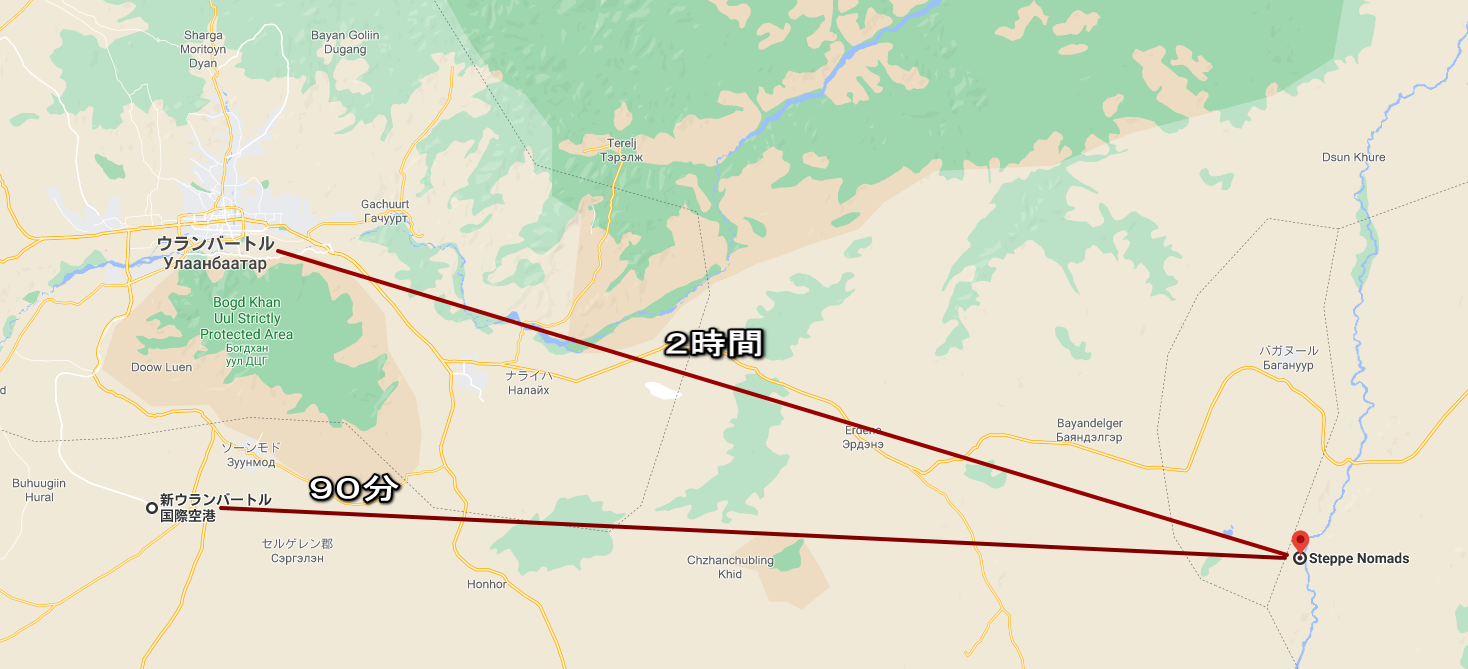
Steppe Nomads Tourist Camp is about 2 hours by car east of Ulaanbaatar, 130 km.
You travel 113 km on a paved road and 17 km across trackless steppe.
All around is steppe as far as the eye can see, a very wide and quiet place. Although it is close to the capital Ulaanbaatar, it gives no sense of that at all.
Steppe Nomads Camp is a recommended accommodation where you stay in a ger, the nomads' portable dwelling, experience Mongolia while horse riding, and receive better steppe service. There are no man-made objects at all around the tourist camp. For safety the accommodation, toilets and so on are lit at all times, but if you lie down on a hill a little way off you can enjoy a night sky where the stars seem to rain down. Thanks to the grand panorama surrounded by the horizon in 360 degrees, you can enjoy every celestial show that lives up to expectations of the Mongolian grand plain: dawn, sunrise, sunset and starry sky.The showers and toilets are at quite a clean level for Mongolia. The restaurant is clean too. Western-style individual toilets for men and women, hot and cold water, showers and more are provided. Delicious high-quality (cold) and (warm) Mongolian and European dishes cooked by professional cooks, as well as cold beer and juice of Mongolian brands, are also served.
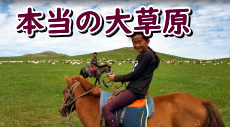
It is right in the middle of the grand steppe. The best way to enjoy the tourist ger is, above all, horse riding. Even first-time riders can ride right away with the guidance of a guide and the horse owner. During the ride, little encounters such as going up a hill to see the view, or visiting a nomad's ger and being treated to tea, are part of the fun. Enjoy horse riding, visits to nomad homes, and walks on the endless steppe.
Steppe Nomads Tourist Camp Data
So that tourists can enjoy their stay to the fullest, Steppe Nomads Camp provides the following rental services.
■ Electricity: 24 hours.
■ Toilets: Western-style drop toilets. Toilet paper is provided. Put used paper in the provided box.
■ Bath: 4 shower buildings; 2–3 men and women can each use them. Towels and shampoo provided.
■ Pick-up and drop-off at Chinggis Khaan International Airport, and transfers arranged from Ulaanbaatar
■ Horse riding experience, camel trekking, nomad homestay
■ Day trips, tent tours, stargazing
■ Ger assembly experience, visit to a Kazakh ger
■ Fishing gear: fishing rods, artificial bait
■ Raft (8 people) + life jackets
■ Kayaks (single and double) + life jackets
■ Mountain bikes + helmets
■ Binoculars for observing wildlife, and telescopes
■ Sports equipment: basketball, volleyball, soft tennis
■ Mongolian bow and arrow, targets • Traditional costumes: deel, hat, belt, boots
■Traditional games: ankle bones (shagai), chess, dominoes
■ Visit to a nomad family
■ Campfire
■ Mongolian traditional song and dance show and more...

Course Code: SN-3003: Local Day Tour, Horse Trekking at Steppe Nomads
|
Ulaanbaatar suburbs・Horse riding trekking, full-day course, lunch included, English guide accompanies |
|||
 Just as you imagined. Ger camp from the south |
8:00 AM, depart your Ulaanbaatar hotel by private car. Move to Steppe Nomads Tourist Camp. On the way, see the Chinggis Khaan Theme Park. After arriving at Steppe Nomads Camp, enjoy Mongolian food. Receive riding lessons with the horses from nomads (instructors). Then horse riding trekking starts, using the tourist camp as a base. * Chaps (knee pads) and helmets are lent free of charge. |
||
|
Meals |
Breakfast: none |
Lunch: ○ |
Dinner: none |
|
Course Code: SN-3003 |
1 person $370 |
2 people $270 |
3 people $200 |
|
*The above itinerary and times may change locally depending on weather and traffic congestion on the day. In that case, please follow the instructions of the local staff. We appreciate your understanding. *Meals may become box lunches, and the hotel / restaurant / ger may each be changed. |
|||
Course code MO-3005: Chinggis Khaan Statue Theme Park and 13th Century Village
|
Chinggis Khaan Statue and 13th Century Village, 1 night at a ger camp on the grasslands, with guide |
|||
Chinggis Khaan Statue 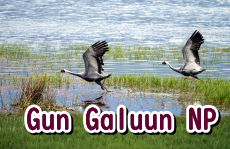 Bird watching |
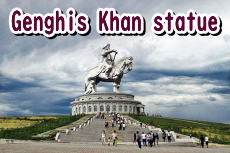
In the morning (around 9:00), drive to the 13th Century Village. On the way, stop at the Chinggis Khaan Statue Theme Park. |
||
 Just as you imagined. View from the back |
Early in the morning, go to see wild animals (sheep, goats, wolves, marmots living in burrows and more). After that, start horse trekking from the tourist camp. A guide and nomads will accompany you. Unlimited horse riding!! Visit a nomad's ger and enjoy meeting local people. Enjoy traditional Mongolian food in the nomad's ger. In the afternoon, travel by private car back to Ulaanbaatar, about 2 hours. The tour ends on arrival at a major city hotel in Ulaanbaatar. Thank you for your hard work. |
||
|
Meals |
Breakfast: ○ |
Lunch: ○ |
Dinner: ○ |
|
Course code: MO-3005 |
1 person $535 |
2 people $435 |
3 people $370 |
| *The Chinggis Khaan Statue Theme Park stands on a hill above the Tuul River, 54 km east of Ulaanbaatar, surrounded by beautiful natural scenery. The memorial site, known as Tsonjin Boldog, shares the history of that era. A 30 m tall horse statue rises at the center of the park on a circular pedestal 12 m high and 30 m in diameter. *The village recreates 13th-century Mongolia as a small kingdom so that visitors can experience the lifestyle of that time in a real setting. *(Optional(extra charge):Helicopterscenic flight: thrilling with no windows! See the magnificent grasslands from the sky <20 minutes>) ※MotorbikeorATV(buggy): you can ride on the grasslands for about 1 hour. An extra charge of $65 per person applies. |
|||

MO-1010-A: Evening Departure, Wildlife Viewing and Horse Riding Experience, 2 Days with 1 Night in a Ger
▶ Book this tour
|
Horse Trekking on the Grand Steppe, 2-Day CourseWith private car, English guide accompanies |
||||
   |
Day 1 |
In the afternoon, after arriving at Chinggis Khaan International Airport (free airport transfer), by private carTourist Campsto the camp, about 3 hours. Arrive at the tourist camp on the grand steppe. Dinner is traditional Mongolian food. At night you can enjoy a sky full of stars (it may not be visible depending on the weather). Please use the free WiFi during your trip. |
||
|
Day 2 |
Early in the morning, go to see wild animals (sheep, goats, wolves, marmots living in burrows and more). |
|||
|
Meals |
Breakfast: ○ |
Lunch: ○ |
Dinner: ○ |
|
|
Course code: MO-1010 |
1 person $535 |
2 people $405 |
3 people $335 |
|
|
*The above itinerary and times may change locally depending on weather and traffic congestion on the day. In that case, please follow the instructions of the local staff. We appreciate your understanding. |
||||
MO-3010: Depart in the morning. Free time on the grand steppe. Optional tours available. 3 Days / 2 Nights ger tour
▶ Book this tour
|
2 nights, 3 days course at Steppe Nomads Camp. Local optional tours can be joined. |
||||
 Photo from inside the ger where you stay |
Day 1 |
In the morning (around 9:00), travel by car from Ulaanbaatar, 2 hours, to Steppe Nomads Camp on the grand steppe. On the way, see the Chinggis Khaan Statue Theme Park. "Stay at a ger camp" |
||
|
Day 2 |
After breakfast, free time. Local optional tours can be joined. "Stay at a ger camp" |
|||
 |
Day 3 |
After breakfast, relax until departure. At 10:00, by private car to the capital Ulaanbaatar. After arriving at your hotel in Ulaanbaatar at 13:00, the tour ends. Thank you for your hard work. |
||
|
Meals |
Breakfast: ○○ |
Lunch: ○ |
Dinner: ○○ |
|
|
Course Code: MO-3010 |
1 person $605 |
2 people $505 |
3 people $405 |
|
|
*The above itinerary and times may change locally depending on weather and traffic congestion on the day. In that case, please follow the instructions of the local staff. We appreciate your understanding. |
||||
Local Optional Tours Departing from and Returning to Steppe Nomads Camp
Course Code: 01 Day tour from the camp: Wild Sheep and Wolf Viewing Tour
|
See the majestic argali sheep (morning or afternoon), guided by a local guide |
|||
|
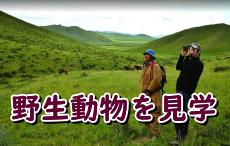
Gun-Galuut offers a truly unique opportunity to see these majestic creatures in their natural habitat. For this reason, this activity has become a must for everyone who visits the nature reserve. The Baits Mountains, a series of mountains 5–10 km southwest of the complex, are home not only to herds of argali sheep but possibly also to gray wolves, Mongolian marmots, foxes, corsac foxes, vultures, falcons, lammergeiers, eagles and many other kinds of wildlife. |
||
|
Local optional tour price: |
1 person $100 |
2 people $65 |
3 people $35 |
Course Code: 02 Day tour from the camp: Bird Watching Tour
|
Bird Watching Tour Private car, local guide accompanies |
|||
|
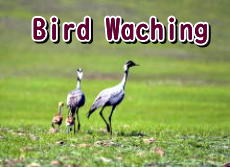
At Gun-Galuut an astonishing number of birds, to be exact 156 species, have been sighted and registered. For this reason, the area has become a destination loved by local and international bird watchers. Gazing at the endangered white-naped cranes quietly walking about, the symbol of Gun-Galuut Nature Reserve, will surely make an unforgettable memory. Endangered species such as the Siberian crane, common crane, hooded crane and Dalmatian pelican are endangered worldwide, while ruddy shelduck, relict gull, grey heron and black stork are often seen. Sometimes sighted |
||
|
Local optional tour price: |
1 person $65 |
2 people $40 |
3 people $25 |
Course Code: 03 Day tour from the camp: Visit a Nomad's Ger and Horse Riding Experience
|
One-day Horse Riding Experience Tour Nomad homestay, instructor accompanies |
|||
|
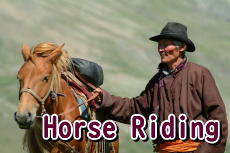
One of the favorite activities of visitors to Gun-Galuut is riding Mongolian horses across the gently rolling green steppe. Riders can feel such joy as they cross high mountains and seas to reach destinations vehicles cannot access. As part of community-based tourism activities, we have worked closely with local nomad families for many years. They offer excellent support during the horse trekking, such as comfortable saddles and gentle horses. You can also borrow protective helmets and spurs from the camp, and experienced instructors can be provided from local families. Livestock herding is also possible, but riding is unlimited. |
||
|
Local optional tour price: |
1 person $65 |
2 people $55 |
3 people $55 |
Course Code: 04 Day tour from the camp: Rafting Tour on the Kherlen River
|
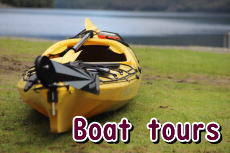
Boat tour. Lure fishing is also possible.With guide |
|||
|
Riding a boat on the quiet Kherlen River and observing the wildlife and nomad life bustling along the river is an incomparably wonderful experience. Therefore, we strongly recommend spending a day on a boat to enjoy the breathtaking scenery of Gun-Galuut. From the friendly camp manager you can rent an 8-person raft and 2-person and 1-person kayaks. Fishing in the river is also possible by arrangement. If you wish, enjoy lure fishing. |
||
|
Local optional tour price: |
1 person $100 |
2 people $55 |
3 people $45 |
Course Code: 05 Day tour from the camp: Fishing Tour
|
Fishing Tour With private car, English guide accompanies |
|||

|
Lenok and grayling are among the most commonly seen fish species in the Kherlen River. In addition, species such as taimen, pike, false asp, Asian carp, Amur taimen, Gibel carp, burbot and catfish are also common. Visitors can fish in the Kherlen River all year round, except from May 30 to September 15. From early spring to autumn, the Kherlen River has the most fish, making it a wonderful destination for anglers. |
||
|
Local optional tour price: |
1 person $170 |
2 people $135 |
3 people $65 |
Course Code: 06 Day walking tour / trekking tour from the camp
|
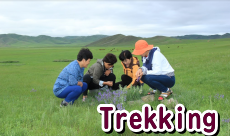
Trekking and Walking Tour (morning or afternoon) |
|||
|
When we say this, it is without the slightest exaggeration. Gun-Galuut offers a remarkably diverse landscape in a relatively small area, from high mountains, small hills and gently rolling green steppe to the mighty Kherlen River, numerous streams, ponds and marshes. Not to mention the wonderful wildlife you can see while trekking. The reserve is well protected by local rangers, so even one or two people will feel safe. Enjoy a solo walk. |
||
|
Local optional tour price: |
1 person $5 |
2 people $5 |
3 people $5 |


[Obon Holiday, 7 Nights / 8 Days]<Fuel surcharge included> [MIAT Mongolian Airlines] Vivant Filming Locations Tour, Gobi Desert and Khongor Sand Dunes, 8 Days
Khongor Sand Dunes, Bayanzag and Yolyn Am sightseeing by domestic flight. On the return by private car, visit the White Stupa, the Large Land Rocks, Terelj National Park and more.Getting to Know the Nomadic Culture of the Grand Steppe
The Nomadic Way of Life
It is not clear when or where nomadism began. But it seems certain that since the beginning of recorded history the Mongolian people have made their living by nomadic herding. The Mongolian steppe is extremely dry and unsuited to agriculture. Apart from the north there are no forests, so living by gathering is not possible, and with no place to hide, hunting is not viable either. The one thing that was barely possible was nomadic herding, and Mongolia was the ideal place for it.
In Japan, nomadism tends to be described with an image of "wandering freely in search of water and grass". In reality, because it is work dealing with living creatures, it requires more labor than farming, and people move under various constraints.
The Four Seasons of Nomadism: Moving Within Constraints
Though there are regional differences, nomadic moves are basically made four times a year, matching the seasons of spring, summer, autumn and winter. With modernization, herding by motorbike and moving by truck can be seen, but the basic form of nomadism has not changed. An old saying goes as follows.
"In spring camp where you are sheltered from the wind, in summer by the water, in autumn at the foot of the mountains, and in winter beside old livestock dung."
| Spring | Leave the winter camp and enter the spring camp (around March, after the New Year "Tsagaan Sar"). The big job at the spring camp is the birth of young livestock. Spring is a harsher season than winter: snow melts in the daytime warmth and freezes in the cold of night, over and over, so the steppe becomes like ice and the livestock cannot eat. Stored meat and dairy products run out, and it is a season of hunger for people and livestock. Mass livestock deaths, steppe fires and wolf appearances also happen often in this season. Even so, the birth of young livestock is a joy above all others. In preparation for the births, the grass is left at the planned site by not grazing there the previous summer and autumn. Preparing shelters for the young animals, hay, and dung for fuel is also essential. |
|---|---|
| Summer | In May, when the young livestock have been weaned and can endure moving, people move to the summer camp. As long as there is a water source such as a river or well, the pasture is rich anywhere and there is no worry about fuel, so people can move relatively freely. Thin livestock eat fresh grass, fatten up and give plenty of milk. It is a season when people are freed from the tension of spring and smiles overflow. On the other hand, summer is also a busy season. Castrating male livestock, work before flies and horseflies appear, shearing sheep and goats, milking many times a day, making felt, making dairy products: there is hardly time to rest. In the Naadam season, men ride to their friends' gers and drink airag together. |
| Autumn | When Naadam ends, it is autumn. In late August, snow sometimes falls along the mountains. The steppe shines golden, livestock store fat and grow plump, and trees in the mountains bear fruit. It is a season cherished with the saying "One autumn is worth three springs". The move to the autumn camp begins around mid-September when snow starts to fall. Places such as the mid-slope of a breezy hill are chosen. Most of the autumn work is spent preparing for the long winter ahead: cutting hay, making dairy products, repairing shelters for young livestock and so on. Also, to build up the livestock's strength, "otor", repeated moves on a short cycle, are made. |
| winter | Around mid-November, when the steppe is covered with snow, people enter the winter camp. The bitterly cold winter, reaching minus 30 to 40°C, lasts four months. First, livestock are slaughtered as food until early summer when milking begins. Because the outside temperature is below minus 10°C, meat can be stored frozen. This period is called the "slaughter month", and slaughtering livestock in other seasons is disliked. Winter camps are set up in valleys or on south mountain slopes to avoid the north wind, and the same place is used every year. This is because enough pasture must be left. Securing a large amount of fuel is also essential, and since there is not a single tree on the steppe, all people can rely on is livestock dung. Dung is dried for about a year before use, so what you use this year was collected last winter, and the dung collected this year becomes next year's fuel. Furthermore, winter lives next to the dangers of heavy snow and wolves, and hay and pens for sheep and others to sleep in must also be prepared. |
In this way, the year on the steppe goes round.
The Nomads' Dwelling, the "Ger"
The ger (called "yurt" in other languages) is an ideal dwelling, indispensable to the mobile life on the steppe. Three or four people can assemble it in about an hour, and it is light enough to be moved easily by ox cart or camel. In summer, opening the lower edge lets a cool breeze through, and at night you can look at the stars through the skylight and sleep smelling the grass. In winter, layering felt on the outside keeps out the cold. Because it is round, there are no corners, so the space is used widely and the heating reaches every corner.
There are no partitions, only curtains in front of the beds. Household goods are extremely simple: the stove in the center provides warmth and is used for cooking. Three or four beds are placed along the left and right walls, with chests for clothes under the beds, and near the entrance are a cupboard, a water bucket and containers for livestock milk. There is neither a kitchen nor a toilet, and whichever ger you visit, this style does not change. It is thoroughly simple, with nothing superfluous, yet nothing is lacking in daily life.
Assembling a Ger
- Walls: Four or five "khana", expanding lattice wall frames made by weaving thin wood diagonally, are joined in a circle. The number of khana determines the size of the ger; five is usual.
- Entrance: A wooden door frame is stood facing south or southeast. Large furniture and the stove are put inside beforehand.
- Roof: Two pillars (bagana) in the center support the round skylight frame (toono); roof poles (uni) are inserted into the skylight like the ribs of an umbrella, and the other ends are tied to the tops of the khana, completing the framework.
- Covering: The framework is covered with felt. First the walls, then the roof, with felt cut in fan shapes, and finally tightened with ropes. A 1 m square cloth (urkh) with ropes is placed over the skylight and opened and closed with the ropes.
- Floor: Lay wooden boards or carpets, put the stove in the center and run the chimney out through the skylight, and it is complete. There are no support poles or cords at all; it is simply placed on the grass and withstands strong winds.
Diet in Nomadic Society
Meat
The basis of a nomad household's diet is meat and dairy products. There are sayings such as "Mention meat and the cheeks swell" and "The best of meals is meat", praising meat dishes. All meat is eaten, but sheep meat is so preferred that "meat" generally means mutton.
In the traditional dish, a sheep killed without shedding blood outside the body is, following custom, divided into shoulder, ribs, breast, thigh and so on, and simply boiled in a big pot with salt, bones in, without even spices. It is so simple it hardly counts as cooking, but the flavor of the meat is brought out and it is truly delicious. Everything is eaten from the organs to the bone marrow, and not a drop of blood is wasted, being made into sausage. Traditionally, roasting meat is taboo, with the idea that "the juices fall and dirty the fire". It seems also because roasting wastes the nutritious juices and fuel.
There is a proverb, "Every meat has its custom", and there are rules not only for preparation but for how to eat, how to arrange, how to serve guests and how to hold it. Beef and goat meat are made into dried meat, and mutton is made into a preserved food by simmering it with salt called "shuus" until it becomes like corned beef. It is said that the dried meat of one whole cow, ground almost to powder, fits in the cow's bladder, and that of a goat in a goat's bladder. On the steppe, "guriltai shul (meat noodle soup)", with dried meat or shuus in handmade noodles, is a standard dinner dish. It is also indispensable on long journeys.
Dairy Products
In summer, whichever ger you visit, dairy products are served piled high. Dried cheese "aaruul" is hung to dry on the ger roof, and a cowhide bag for making airag is placed on the left of the entrance. In this season the ger is wrapped in the sweet and sour smell of dairy products. Dairy products are called "tsagaan idee (white food)" and are a basic food alongside meat. From summer to autumn, when livestock give plenty of milk, dairy products are the center of the diet, and in summer little meat is eaten.
Mongolian dairy products may be among the most varied in the world. Livestock milk is not drunk raw but is all processed. Even liquor is made from milk. Each is made through repeated steps such as standing, churning and heating. Mare's milk does not curdle, so only airag is made from it, but it is so nutritious that "one mare's milk can satisfy three people", and some people spend the summer on airag alone.
| Urum | A thick, cream-like product high in fat |
|---|---|
| Tarag | Yogurt |
| Byaslag | Soft cheese |
| Eezgii | Cheese without sourness |
| Aaruul | Hard, sour dried cheese |
| Shar tos | Butter oil |
Milk also goes into tea. "Suutei tsai (milk tea)" is made by putting tea leaves into hot water boiled in a big pot and simmering, then adding fresh milk and salt and stirring. Milk fat or butter is sometimes added, making it like a soup. It is drunk often from morning to night. In summer, when little meat is eaten, morning and noon meals are often finished by nibbling dried cheese such as aaruul while drinking suutei tsai.
The Winter Lifeline: Livestock Dung
Japanese people tend to frown at livestock dung, but for nomads it is a lifeline and a treasure of the steppe. It is well dried, has good heat, smells pleasant, gives off no carbon monoxide, and on the steppe there is no better fuel. The dung of all livestock is used, but each has a different use and even its own name. This shows how important it is to life.
- Cow dung: Dried, it is called "argal". It is large and easy to collect, and because cows are ruminants it holds fire well, so it is commonly used.
- Horse dung: One-year-old is "khomool". Horses do not ruminate so it holds fire poorly and is used for starting fires. Two- to three-year-old is called "khukh khomool (blue khomool)", a splendid fuel that shines blue and does not let rain through.
- Sheep and goat dung: "Khorgol". Because it is small it is not picked up for use; instead, what is excreted every night in the pen where the animals are sheltered is trampled into a thick layer, cut out and dried for use. Called "khurzun", it can be obtained in large amounts and has strong heat, making it the best fuel.
Dung has uses beyond fuel. It is piled on the north side of the ger as a windbreak, and under the dung of sheep pens, which does not freeze even in midwinter, it acts as a natural refrigerator where airag and the like can be buried and stored. In winter it is sometimes laid under the ger. Also, horse and cow dung produces a lot of smoke, so it is burned around the animal shelters to protect young livestock from flies and horseflies. Dung also fertilizes the steppe and helps the pasture grow. It is truly a treasure of the steppe.
Horses and the Mongolians
As the proverbs "Mongolians are raised on horseback" and "A Mongolian has four legs" say, horses and the lives of nomads cannot be separated. "A good horse" means good luck, "to take off the stirrups" means to reach the destination and finish the work, and "to go see the horses" is an idiom for going to the toilet. There are also proverbs such as "To purify the heart, climb a mountain; to cure illness, ride a horse" and "A man's courage, a saddled horse's ability". The horse is active both in driving off illness and in stirring up courage, which tells us what the horse means to Mongolians.
Whereas sheep are valued as real property, horses have, besides real value, a strong ornamental quality symbolizing social status. Riding a fine horse and galloping freely across the steppe is the pride of nomads, and the longing to own a fine horse is never exhausted in songs and tales. In folk tales and the like, horses appear as companions who understand each other, and sometimes, even recognized as having abilities superior to humans, as helpers of the hero.
What kind of horse is the fine horse Mongolians long for? One that runs ahead of all and has excellent endurance to run long distances; the style of its gallop is also an important condition. A horse that moves with a lateral gait, putting out the left and right legs alternately, called a "jorgo", can fetch ten times the price of an ordinary horse.
The horse, a source of pride in this way, is treated with respect. Because good fortune is said to dwell in a horse's head, it is never beaten with a whip, and a beloved horse is not eaten. Ordinary horses are also eaten, but they are distinguished from other livestock, and after eating they receive treatment such as being enshrined at an ovoo.
Nomad Wisdom: Castration
One feature of Mongolian nomadism is castration. Herd animals fight over females among males in the rutting season and tend to scatter. Because nomadism keeps livestock as herds, it does not work if the herd scatters. Yet culling would reduce the livestock that are wealth. So a certain number are kept as breeding males and the others are castrated, with the aim of preventing the herd from scattering without reducing livestock. Its origin is unknown, but it is brilliant wisdom. For this reason, no livestock are disposed of by culling in Mongolia. The lamb meat that circulates in the world as lamb comes from culling, and it is said that Mongolia has none.
The usual time for castration is a horse in its third year (after turning three), cattle at two years, and sheep and goats at around three months. It is easy for sheep and the like, but for horses it is heavy labor: catching the horse is hard, and it takes three or four strong men to pull it down and hold it. Women help with shearing, but castration is a man's job.
Castration has many advantages beyond preventing the herd from scattering and livestock from decreasing. For example, the remaining breeding male becomes the leader and leads the herd, so the herd can be managed just by controlling that male, which is indispensable for managing horse herds. Also, geldings are gentle and easy to ride, so they are used as riding horses. It is said that Chinggis Khaan's army was also made up of geldings. The meat of castrated sheep is said to be tender, free of odor and delicious.
Views of Dogs and Wolves
Faithful Watchdogs
When you approach a nomad's ger by car, a big dog with two spots on its forehead and drooping ears barks at you ferociously. This is the so-called "Mongolian dog". The guest calls out loudly to the household, "Hold the dog!" This is the first greeting, and the guest gets out of the car only after confirming that the host has come out and held the dog. "A guest the dog doesn't bite" is an idiom for an acquaintance or a frequent visitor.
Every ger keeps one or two dogs, given the job of keeping outside enemies from entering the area around the ger and the sheep flock. They bark even if a car merely passes nearby, but when the car leaves the territory to be guarded, they return as if relieved that their job is over. Truly faithful watchdogs. From winter to spring, when the mountains are covered with snow and small animals disappear, wolves frequently appear near the camps targeting livestock. Driving off those wolves is an important job of the dogs.
Though given such an important role, the reality is that the dog is rated low. "Whether the dog barks or not is the same" and "A dog barks, a camel walks" are judgments that it is nearly useless. "A dog's character" means a bad character, "a dog's face" means an unpleasant appearance, and "a dog's way" means straying from the path of humanity. However, there are also proverbs that value the dog's role, such as "If the dog is good the sheep grow fat; if the wife is good people gather".
The Wolf, Judged in Complex Ways
In mountain areas snow leopards also attack livestock, but on the steppe only wolves attack livestock. Wolves are said to leap into a flock and indiscriminately bite sheep at the throat to kill them. In fact, stories of as many as 100 sheep killed by wolves in a single night still make the news today. Damage is especially great from winter to spring, when small animals disappear from the mountains, and one of the nomads' important jobs in this season is protecting livestock from wolves. Horses are also easy prey, and wolves are said to love horse meat. Horses, which do not ruminate, eat a lot, so if horses are near the camp the grass for sheep and cattle disappears; for this reason horses are grazed away from the camp. A watch is kept, but wolves are said to skillfully exploit gaps and attack horses that have strayed from the herd and slow foals.
Naturally, a wolf that attacks livestock is rated as the ultimate villain, with sayings like "The wolf to the sheep, the rich to the poor" and "Wolf if it eats, wolf if it doesn't". On the other hand, people even feel awe for its solitary, dignified figure that, unlike a dog, does not fawn on people. As an "animal protected by heaven" and an "animal that brings good luck", people rejoice that "meeting a wolf on a journey is a good omen", and consider "meeting a fox" bad and change their route. The custom of wearing a wolf's ankle bone as a charm against evil still exists. It is said that a household that wolves visit will see its livestock increase, and when livestock are eaten it is accepted as "heaven took what it should take". Weak livestock being attacked seems to be thought of as natural selection.
The oldest Mongolian classic, "The Secret History of the Mongols", tells that the ancestors of Chinggis Khaan were a wolf given a mandate from heaven and a deer that crossed the lake, conveying that the wolf has since ancient times been an object of awe. In this way the wolf is, for Mongolians, a mysterious animal whose evaluation is unsettled and which stirs complex feelings.

Gobi Desert, Mongolia: Visit the Filming Locations, Camel and Horse Riding Experience, 8-Day Tour
By plane to the Khongor Sand Dunes, Bayanzag and Yolyn Am sightseeing. By car, the Central Gobi Desert tour and a stay at the Steppe Nomads Camp on the steppe:Tsagaan Suvarga (white stupa) and Baga Gazriin Chuluu (small land rocks)
Horse Trekking on the Mongolian Steppe and Mongolian Ger Stay, 3 Days / 2 Nights
From Ulaanbaatar airport straight to the Step Nomads grand steppe. 2 nights in a tourist camp ger. Horse riding experience too, and a visit to a nomad's ger. The best tour for getting a feel for Mongolia in 3 days.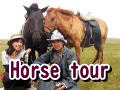
1 Night in Ulaanbaatar, 1 Night in a Ger, Horse Trekking, 3 Days / 2 Nights
From the local airport straight to the grand steppe. 2 nights in a tourist camp ger. Then a horse riding experience too. A visit to a nomad's ger as well. The best tour for feeling Mongolia in 3 days.
Horse Trekking Outside Ulaanbaatar and Nomad Ger Visit, 5 Days
Move across the steppe with your horse while receiving a lecture (explanation) from a nomad (instructor). Safe for beginners too, with unlimited riding, a course where you can enjoy a horse riding experience your own way.
Mongolian Nomads and Horse Riding Plan, 3 Patterns to Choose for the Last Day, Up to 8 Days
The perfect course for feeling the grandeur of the Mongolian steppe! Enjoy the beauty of the steppe and the fresh scent of its grass that can be tasted only in Mongolia!
Chinggis Khaan Footsteps Tour, Binder Village, Dadal Village, 6 days
Visit the homeland of Chinggis Khaan. See the monument marking the birthplace of Chinggis Khaan. The monument is a huge 10 meters tall, with a portrait of Chinggis Khaan and a picture of the war banner called the "Sulde" carved on its face.
Off-road motorbike tour with a nomad homestay, 4 to 8 days
Motorbike touring starts from a ger base. Horse trekking is also possible if you wish. After practice, try riding by yourself to nearby grasslands and hills. Beginners can join.
Make a Wish at the Mother Rock Eej Khad, Horse Trekking, 8 Days
A round-trip horse trekking journey to Eej Khad, the rock said to grant wishes. One private vehicle and a cook travel with you, so you can feel secure. A horse riding tour for intermediate and advanced riders.
Horse Trekking on the Steppe, 3 Nights in Tents, Ulaanbaatar Sightseeing, 8 Days
A summer-only horse trekking course recommended for repeat visitors. You travel across the steppe with your horses and tents. A course where you can fully enjoy Mongolia's steppe and great nature.
Tent Stay and Horse Trekking on the Grand Steppe Outside Ulaanbaatar, 8 Days
Meals on the grand steppe are made by a cook, but let's all pitch in and do our best together!



Basic Mongolia Information
Basic information

Tourist Destinations in Mongolia
Destination
Travel Guide
Travel guide
Winter Tours
Winter tours
Tailor-Made Travel
Tailor-made
Tourist Events
Tour events
Tourist Camps
Tourist camps
Ulaanbaatar Sightseeing
UlaanbaatarCity Tour

Mongolian Food
Mongolian Foods
Restaurant Guide
Restaurants
Gallery
Gallery
Car Rental
Car Rental
FAQ
FAQ