Mongolia tours with free WiFi during your trip – leave it to a local specialist travel company.

Contact us for advice and quotes on local Mongolia toursEmail:info@nomadmongolia.com





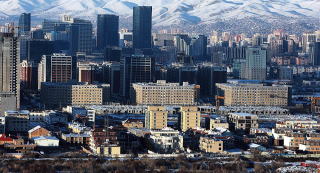 |
Ulaanbaatar, the capital Ulaanbaatar has changed its name many times. It was called Orgoo (1639–1706), Ikh Khuree (1706–1911) and Niislel Khuree (1911–1923), and in 1924 took its present name. Ulaanbaatar means "Red Hero". It stands on the bank of the Tuul River and is surrounded by the Khangai mountains, with Bogd Khan Mountain overlooking Ulaanbaatar. The city's history began in 1639 with the building of a Lamaist monastery, and in 1999 it celebrated its 360th anniversary...
|
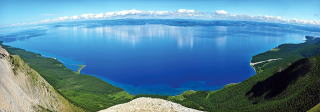 |
Lake Khovsgol Khuvsgul Province, called the Switzerland of Mongolia by foreign tourists, is a province of clean air where mountain ranges tower, clear rivers flow and flowers bloom in many colors. The north of Khuvsgul Province borders Russia, and it covers an area of 10,000 square kilometers. Named after Lake Khuvsgul, the deepest lake in Central Asia, the region is also well known for lakes such as Erkhel, Achit and Tsenger, and for mountains such as Burenkhaan, Khoridol Saridag and Soyon, standing at 3,500 meters above sea level..See more |
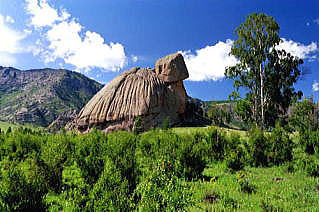 |
Terelj National Park The park is located 80 kilometers northeast of Ulaanbaatar. It is at an altitude of 1,600 meters above sea level, suited to hiking, horse riding and rock climbing. The scenery is a little like the Alps. It was developed as a national park in the 1960s and officially became a national park in 1994. Within the park live 250 species of birds and protected animals such as moose and bears. Some ger camps have parking and electricity, so it can be said to be developed as a tourist destination too...See more |
 |
South Gobi A Journey to Explore the Secrets of the Mongolian Gobi! |
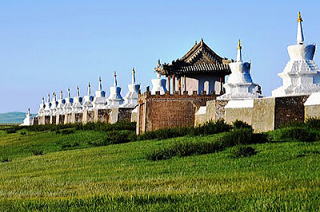 |
Karakorum, Orkhon Valley and Orkhon Inscriptions |
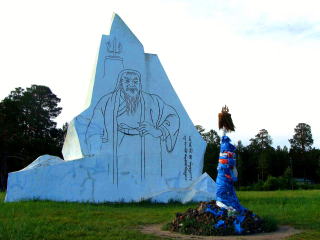 |
Dadal, the Homeland of Chinggis Khaan Dadal is located in the north of Khentii Province, about 585 km from the capital Ulaanbaatar. Dadal Sum is said to be the birthplace of Chinggis Khaan. In the center of Dadal Sum, at an elevation of 800 meters, is a mineral spring called Lake Gurvan. There, in 1962, a monument to Chinggis Khaan was first built. To the north of it, a small hill 900 meters above sea level in a pine forest is called "Deluun Boldog", and it is said to be where Chinggis Khaan was born. |
  |
East Gobi, Zamyn-Uud Station and Sainshand Station Energy Center, The Gobi Desert, another face of Mongolia known strongly for its steppe image. The nomads here herd with camels, not horses. In the Gobi Desert there are many nomads who raise camels, and you can also taste camel dairy products. Of course you can also ride a camel. A monastery in the sand, dinosaur fossils excavated at the Red Rocks, and a still little-known Mongolia are here. Danzan Ravjaa, the living Buddha of the Gobi, had his disciples gather in the many-colored hills (near where Khamar Monastery stands) and draw up the layout for the landing of Shambhala, and also built a land for meditation practice with wooden stupas, doors and stone piles. At that place, his holiness... |
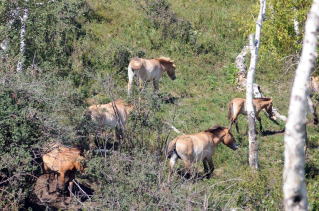 |
Hustai National Reserve. Hustai, a national park that relocates, protects and studies Mongolia's wild horses native to the Gobi region, is mountainous with many birches, and its name comes from khus (birch) and tai (with trees). The world's last wild horse, the "Takhi" or "Przewalski's horse", can be seen in this area. The Takhi was endangered in the Gobi Desert in the 1960s, so several were moved to specially bred forest parks in Europe. Since wild horses were returned to Mongolia in 1995 from European zoos (in the Netherlands and Switzerland), the number has grown to 170. Hiking and horse trekking tours can be enjoyed in the Hustai area... |
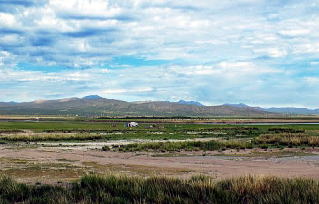 |
Undurshiret on the Grand Steppe About 220 km southwest of Ulaanbaatar, almost midway to Karakorum, about 4 hours by car, the campsite is set up on the banks of the Tuul River flowing through a vast steppe surrounded by beautiful mountain ranges. Please also use it as a stopover on the way to Karakorum (about 4 hours by car). The splendor of the scenery is clear from its having been chosen as the filming location of director Makoto Shiina's film "White Horse" and a Kubota commercial, and we recommend it with confidence. Undurshiret village has also given us a guarantee that no new campsites or facilities will be developed for the next 15 years, in order to protect this scenery. |
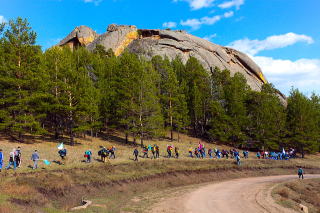 |
Duganakhad One of Mongolia's resort-type tourist camps, the Duganakhad Resort Camp is in a picture-perfect mountain valley 108 km north of Ulaanbaatar, with 40 gers that can hold 110 people. It operates all year round through all four seasons. At the Duganakhad Resort Camp, so that you can enjoy riding in the beautiful summer steppe, an instructor stays with you and teaches how to mount, dismount and handle the horse. Please experience the beautiful Mongolian summer, when the sky is even clearer and the starry sky shines even brighter. |
 |
Chinggis Khaan Statue Theme Park, 13th Century Village National Park of Mongolia The Chinggis Khaan Statue Theme Park is located on a highland of the Tuul River, 54 km east of Ulaanbaatar and graced with beautiful natural scenery. The memorial site, called Tsonjin Boldog, shares the history of its time. The theme park covers 212 hectares, with a 30 m tall horse statue towering in the center, and its circular pedestal is 12 m high and 30 m in diameter. At the 13th Century Mongolian Village you can visit the great equestrian statue of Chinggis completed in June 2008; the 13th Century Village is divided into a nomad village, a culture village, a shaman village and more, where you can see the Mongolian way of life of that era in each village, and in the nomad village try making dairy products. |
 |
Tsenkher Hot Springs A hot spring 500 km west of Ulaanbaatar and 30 km southeast of Tsetserleg, the provincial capital of this region. In the astonishing scenery of Arkhangai Province you can see rivers full of fish, several volcanic lakes, broad forests, yaks spread across the pastures and more. The Tsenkher Jiguur spring has a temperature of +83.5°C and contains hydrogen sulfide. (Indoor and open-air baths, no swimsuit needed.) A hot spring bath while gazing at a sky full of stars will be a supreme memory (weather permitting). The hot spring wells up in a vast hilly area, and it is a rustic hot spring with open-air storage pools. The accommodation is a cluster of gers for tourists. There is a road from Ulaanbaatar to Karakorum, but from Karakorum to this hot spring you arrive after a full day's drive over steppe with no road. |
 |
Baga Gazriin Chuluu (small land stones) Baga Gazriin Chuluu (small land stones) is located about 37 km northwest of Delgertsogt District in the province. This granite area, surrounded by flat plains, lies at 1,768 m above sea level and covers 300 square kilometers. Around the mountain paths and valleys, besides many springs, a considerable number of ancient tombs, kirigsuurs, rock paintings and monuments can be seen. There are many sightseeing spots, such as Ger Chuluu, Suduntiin Am, Jargalant cave, the Eye Spring, and the poplar rocky gorge called Takhiriin Khavtsal. Ger Chuluu has many cave drawings, including a petroglyph depicting a man tying two ibex with a rope. These cave paintings belong to the late Bronze Age and attract attention from researchers. |
 |
Ikh Gazriin Chuluu (large land stones) Ikh Gazaryn Chuluu is a complex rocky escarpment originating in the Permian and Cretaceous periods, composed of crushed rock of granite, porphyry and diorite. Located at 1,565–1,709 meters above sea level, it covers 600 square kilometers, is 30 km long and 15 km wide. It has more than 40 caves, and the cave called Tagtanii Baast (pigeon droppings) is 30 m long, 3.5 m wide and 10 m high. The place is home to more than 20 species of animals, including marmots, foxes, black insects, hawks, tree bark and corsac foxes. It was designated a nature reserve in 2003 and protected as a national park in 2012. A monument dedicated to the state elder singer N. Norovbanzad and her popular song "Uyahan Zambuu Tiviin Naran" is here. In addition, the first open-air theater named after the great singer was established at Ikh Gazaryn Chuluu. |
 |
Ongi Monastery Ongi Monastery is in Saikhan-Ovoo district of the same province. The two monasteries on the north and south sides of the Ongi River are together called Ongi Monastery. It is regarded as one of the largest monasteries in Mongolia. Ongi Monastery was built in 1660. At that time its grounds were huge, with about 30 temples and four large assembly halls. It is said to have housed about 1,000 monks. In the socialist era Ongi Monastery was treated as taboo and was completely destroyed in 1939. Many monks became victims of the Great Purge. After democratization, several monks returned to the monastery and began Buddhist teachings. Now one assembly hall has been fully rebuilt. Around the monastery, traces of temples and more still remain. |
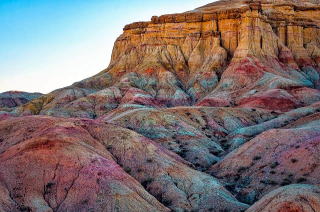 |
"Tsagaan Suvarga (white stupa)" slope The "Tsagaan Suvarga (White Stupa)" slope is southwest of Del Mountain in Uldzit district. It is an ancient sea bed, a steep slope characterized by the structure of sediments built up over millions of years. The slope faces east toward the sun, and from a distance it looks like the ruins of an ancient city, which is fascinating. The landscape exceeds 60 meters at its highest point and continues for an impressive 400 meters. The stupas rise to the sky at a 90-degree angle. After heavy rain, the torrent flowing beneath the stupas looks like a huge waterfall. |
 |
Rock paintings of Mount DeelRock paintings of Mount Deel: Mount Deel extends 25 km from the white stupa and lies within the territory of Ulziit District. From the base at the bottom to the summit, the east face of the mountain is covered with animals of various kinds, humans, symbols and emblems carved in different historical periods. Images of animals such as ibex, horses, riders, camels and anthropomorphic figures are the most common. Mount Deel has more than 3,000 rock paintings, and four inscriptions in classical Runic script, Mongolian and Chinese date back to the Tang dynasty, and about 20 square tombs are said to remain. Countless rock paintings drawn by ancient people are scattered about.Figures of the people who handle them are also drawn, so you can imagine how people lived long ago. |

(See more Mongolia tours)



Basic Mongolia Information
Basic information

Tourist Destinations in Mongolia
Destination
Travel Guide
Travel guide
Winter Tours
Winter tours
Tailor-Made Travel
Tailor-made
Tourist Events
Tour events
Tourist Camps
Tourist camps
Ulaanbaatar Sightseeing
UlaanbaatarCity Tour

Mongolian Food
Mongolian Foods
Restaurant Guide
Restaurants
Gallery
Gallery
Car Rental
Car Rental
FAQ
FAQ