Mongolia tours with free WiFi during your trip – leave it to a local specialist travel company.

Contact us for advice and quotes on local Mongolia toursEmail:info@nomadmongolia.com




Khuvsgul Province, called the Switzerland of Mongolia by foreign tourists, is a province of clean air where mountain ranges tower, clear rivers flow and flowers bloom in many colors. The north of Khuvsgul Province borders Russia, and it covers an area of 10,000 square kilometers. Named after Lake Khuvsgul, the deepest lake in Central Asia, the region is also well known for lakes such as Erkhel, Achit and Tsenger, and for mountains such as Burenkhaan, Khoridol Saridag and Soyon, standing at 3,500 meters above sea level. The forest resources of this province rank first in the country, amounting to as much as 5,000 square meters per person. There are also many mineral springs, both cold and hot. The forests include larch, cedar, spruce, pine and fir, and some larches reach about 40 meters in height. Many medicinal herbs also grow. Among animals there are rare ones such as deer, moose, wild goats, wild sheep, sable and beaver, as well as foxes, wolves, bears, squirrels and skunks. Birds include condors, eagles and woodpeckers.
Khuvsgul Province is also rich in natural resources. High-quality coal, gems, jade, as well as limestone and marble for building materials are mined in large quantities. Lake Khuvsgul is the largest lake in the country, and 79% of it is more than 100 meters deep. The lake is very clean with little organic matter, and the lake bottom is rich in oxygen. The lake is as clear as a stream, and you can even see fish living at 10 meters. 10 kinds of fish for catching live here. About 100 rivers with sources in the various mountain ranges reach this lake, and from here it flows out as the Egiin River, which joins the Selenge River and flows into Lake Baikal. Lake Khuvsgul begins to freeze in late November and is covered with ice 1 to 1.5 meters thick. Khuvsgul Province has the second largest population after Ulaanbaatar. The total population is 116,000, and it is made up of 24 districts. The provincial capital is Murun, 692 km from Ulaanbaatar. Khuvsgul Province is developing tourism and infrastructure centered on Lake Khuvsgul.
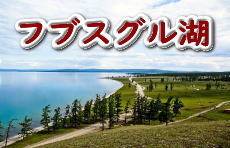
Lake Khuvsgul, called the "Switzerland of Mongolia", is Mongolia's largest freshwater lake, near the Russian border. The river flowing out of the lake empties into Lake Baikal to the north. The lake, surrounded by conifers, is said to have the second highest transparency in the world (over 20 m), and sparkles reflecting the blue of the sky. In summer flowers bloom on a carpet of grass, and in autumn the trees turn golden.
To visit this lake, fly from Ulaanbaatar by small plane to the town of Murun. From this town, drive about 3 hours north by jeep on roads that are not roads. Although 96 streams flow into Lake Khuvsgul, only one, the "Egiin" River, joins the Selenge River and flows into Lake Baikal in Russia. Lake Khuvsgul is 136 km long and 262 m wide (sic), at an elevation of 1,645 meters.
All the accommodations are on the west side of the lake, so you can also enjoy the sunrise from the lake. At night you can hear the sound of the lake, and you will see a different side of Mongolia from the steppe.
Around Lake Khuvsgul, fishing, sport fishing and boat tours are popular. Along Lake Khuvsgul there is a wonderful lodge for bird watching, where you can enjoy seeing migratory birds arrive from Siberia.
.jpg)
Reindeer and the Tsaatan People
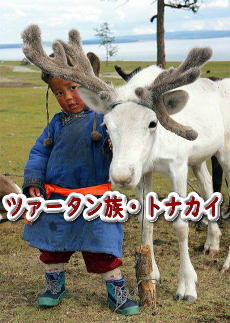
The reindeer-herding people called the "Tsaatan", who live only in Khuvsgul Province, also live here. In their language, Tsaatan means "people who have reindeer". The Tsaatan differ greatly from the Khalkh, the main ethnic group of Mongolia, in language and way of life. Their life was originally mainly hunting, but from around the middle of the 20th century they came to depend on reindeer herding, and today reindeer nomadic life is central.The dwelling called an "ortz" is portable but fundamentally different from the Mongolian ger. Its frame is made of dried larch poles 3 to 4.5 meters long, 32 for a large one and 22 to 25 for a medium one, and it closely resembles the conical portable dwelling, the tepee, found from Scandinavia to Siberia and even across the Americas. Today about 30-odd families, some 500 Tsaatan, keep around 500 reindeer. The Sayan Mountains where they live are still an area with many wild reindeer. Their few sources of cash income are cutting off the reindeer antlers once a year, used as a raw material for traditional medicine, and selling them to merchants who occasionally come to the village.

Lake Khuvsgul, Fishing Tour
Khuvsgul is famous for fishing tours. The fishing season starts in mid-August. For serious fishing enthusiasts, being able to come abroad and fish on Lake Khuvsgul is a delight. You can rent a full set of fishing gear locally, go by car to the fishing spots with an instructor holding a local fishing license, and fish to your heart's content. For lures, you can bring your own or rent them locally. If you would like river fishing near Lake Khuvsgul, please contact us.
Lake Khuvsgul, Reindeer and Tsaatan Tour
MO-1021 Khuvsgul by domestic flight, Lake Khuvsgul, 3 days with 2 nights in a ger
▶ Book this tour
|
Lake Khuvsgul Tour, boasting the world's second highest water transparency |
||||
 |
Day 1 |
Hotel pick-up. At 09:00 fly from Ulaanbaatar to Murun. After arriving in Murun at 10:00, head to the tourist camp on the shore of Lake Khuvsgul, about 160 km. On the way, visit a Tsaatan family. You can also ride a yak and take a souvenir photo. Photo with the reindeer. After arriving at the tourist camp, a walk along the shore of Lake Khuvsgul. [Stay at the tourist camp] | ||
|
Day 2 |
Morning: At Lake Khuvsgul, receive a lecture from a nomad (instructor) together with the horse that will be with you. Then horse trekking from the camp as a base. The nomads gauge each person's riding level and take you trekking on a course and schedule that suit it without strain. Afternoon: At Lake Khuvsgul you can enjoy a cruise on the lake and more. A boat ride on the lake. After dinner, enjoy the natural star show (it may not be visible depending on the weather). [Stay at the tourist camp] |
||
|
Day 3 |
After breakfast, at 08:00 by car to Murun Airport. Depart Murun at 10:30 and arrive in Ulaanbaatar at 11:30, then with the guide to your hotel in Ulaanbaatar. After arriving at your hotel in the city, the tour ends. |
|||
|
Meals |
Breakfast: yes. Lunch: yes |
Lunch: yes. Dinner: yes |
Dinner: yes |
|
|
Course code: MO-1021 |
1 person $1,945 |
2 people $1,680 |
3 people $1,475 |
|
|
*The above itinerary and times may change locally depending on weather and traffic congestion on the day. In that case, please follow the instructions of the local staff. We appreciate your understanding. |
||||

MO-1022: Switzerland of Mongolia, Lake Khuvsgul by Private Car, 4 Days with 2 Nights in a Ger
▶ Book this tour
|
Mongolia's Switzerland, Lake Khuvsgul Tour in 4 Days, 3 Nights / 4 Days Course, English Guide Accompanies |
||||
 |
Day 1 |
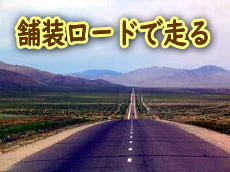
At 07:00 in the morning, leave Ulaanbaatar by private car for Murun. Lunch at a country restaurant. After lunch, head for Khuvsgul Province. Enjoy the car trip, taking in the magnificent Mongolian land spreading beyond the window. After arriving in Murun in Khuvsgul Province, go to a hotel in the city. |
||
|
Day 2 |
Day 2: Head for Lake Khuvsgul. On the way, visit a Tsaatan family. You can also ride a yak and take a souvenir photo. Photo with the reindeer. After arriving at the tourist camp, a walk along the shore of Lake Khuvsgul. [Stay at the tourist camp] Day 3: At Lake Khuvsgul, receive a lecture from a nomad (instructor) together with the horse that will be with you. Then horse trekking from the camp as a base. The nomads gauge each person's riding level and take you trekking on a course and schedule that suit it without strain. Afternoon: At Lake Khuvsgul you can enjoy a cruise on the lake and more. A boat ride on the lake. After dinner, enjoy the natural star show (it may not be visible depending on the weather). [Stay at the tourist camp] |
||
|
Day 4 |
At 08:00 in the morning, return by car to Murun. Afternoon: return to Ulaanbaatar by private car with the guide. After arriving in Ulaanbaatar, to the hotel where you are staying. The tour ends. |
|||
|
Meals |
Breakfast: yes. Lunch: yes |
Lunch: 3 |
Dinner: yes |
|
|
Course code: MO-1022 |
1 person $2,150 |
2 people $1,545 |
3 people $1,475 |
|
|
*The above itinerary and times may change locally depending on weather and traffic congestion on the day. In that case, please follow the instructions of the local staff. We appreciate your understanding. |
||||
Lake Khuvsgul Tour

Winter Lake Khuvsgul, Tsaatan People and Reindeer Riding Tour, 9 days
Interact with the Tsaatan people, try riding a reindeer, and even experience shamanism. Spend a day learning about them. By chatting with local people and learning about their culture and how they have kept their traditional way of life over the years, you can fully enjoy their warm hospitality. Enjoy the beauty of the snow-covered forest. You stay in a local cabin.
Naadam Festival, Lake Khuvsgul and Meeting Reindeer, 8 Days
After seeing Naadam, Mongolia's biggest event, fly domestically to Lake Khuvsgul and meet the Tsaatan and their reindeer. Lake Khuvsgul, the "Switzerland of Mongolia", is Mongolia's largest freshwater lake, near the Russian border.
Karakorum Ruins, Khorgo Volcano and Lake Khuvsgul, 8-Day Tour
After visiting the Karakorum ruins and the Khorgo volcano, go to Lake Khovsgol, called the "Switzerland of Mongolia," Mongolia's largest freshwater lake near the Russian border. On the lakeshore live the Tsaatan people, who keep reindeer.
Lake Khuvsgul, Tsaatan People, Reindeer and South Gobi Sightseeing, 8 Days
Lake Khovsgol, close to the Russian border, is also surrounded by coniferous forest, and its natural scenery is like Switzerland in the European Alps or the forests of Northern Europe. In the South Gobi, camel riding at Bayanzag and the Moltsog dunes
Lake Khuvsgul, Tsaatan People, Reindeer and South Gobi Desert, 8 Days
"Lake Khovsgol," close to the Russian border, is also surrounded by coniferous forest, and its natural scenery is like Switzerland in the European Alps or the forests of Northern Europe. In the South Gobi, camel riding at Bayanzag and the Khongor Sand Dunes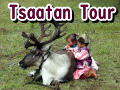
Lake Khuvsgul Tour: Search for the Reindeer People, the Tsaatan, 6 Days
Lake Khuvsgul, the deepest and second largest lake in Mongolia. Nearby live the "Tsaatan", nomads who keep reindeer (people who have reindeer).
Mongolia Taimen Fishing Tour, 8 Days
The Mongolian taimen (Hucho taimen) is one of the five species of the genus Hucho in the world and is distributed in northeastern Eurasia. Reaching nearly 2 m, this fish is among the largest of the salmon family in the world.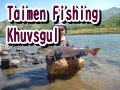
Lake Khuvsgul, Tsagaan Nuur Fishing and Taimen Fishing, 8 Days
The fishing season begins in mid-July. For serious fishing lovers, it will be a joy to be able to "come overseas and enjoy fishing on Lake Khovsgol."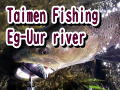
Mongolia Fishing: Egiin Gol, Tarvagatai River and Tesiin Gol, 8 Days
Taimen fishing, all-day fishing continuing from the previous day, visiting a nomad home, observing their way of life, deepening exchange with the nomads, tasting dairy products and other optional tours available, ger stay.
* Prices, times, number of services and opening hours shown are guidelines. They may change, so please ask us for the latest information.
Northern Towns and the Lake (Sukhbaatar, Murun, Lake Khuvsgul)
Sukhbaatar (Сүхбаатар)
The capital of Selenge, the farming province that supports Mongolia's stomach
The capital of Selenge Province, in Mongolia's grain belt. All over town there are monuments shaped like ears of wheat. Because it borders Russia, there are many Russian-style buildings and shops selling Russian goods, and railways and roads are well developed. Buses, taxis and trains to and from Ulaanbaatar and Russia come and go constantly. During World War II many Japanese prisoners of war were interned here, but today few even among local people know of it.
Getting around and highlights
A compact town that can be walked from end to end. The road running east-west in front of the station is the main street. Trade with Russia is lively, and Russian goods can be bought at markets and shops. There are also cute pastry shops and coffee shops, making it a good town for a break. Wild fruit grows on the riverbank where the Selenge and Orkhon rivers meet. A little way out of town you can observe wild animals such as foxes, wolves and hedgehogs. There are also taxis that will take you around the sights for about 100,000 tugrik per car.
Site of the Japanese Cemetery
The site of the cemetery of Japanese soldiers sent to Sukhbaatar as prisoners of war between 1945 and 1947. Turn left after the international shopping center on the road toward Altanbulag, and it is on a hill reached by walking along the power lines. It was once maintained, with a gate and fence, but is now neglected. The Japanese prisoners are said to have been put to construction of a timber factory and forced labor in it, and many died of malnutrition, cold and other causes. Many of the remains were collected in the 1990s as a joint project of the Japanese and Mongolian governments and returned to Japan.
Saikhan Khutul Hill (Сайханы хөтөл)
A hill said to be the birthplace of Khulan Khatun, a consort of Chinggis Khaan. You can look out over the point where the two great rivers, the Selenge and the Orkhon, meet. It is a famous spot that Mongolians visiting Selenge Province always go to. There is also a jeep line sliding down between the hills (about 20,000 tugrik), letting you enjoy the view as you cut through the wind.
| Location | Go about 10 km west along the main street and you run into the Russian border (crossing is not possible). Saikhan Khutul is on its left. |
|---|---|
| Open | 24 hours |
| Admission | 3,000 tugrik per car, 500 per person |
| Note | Because it is close to the Russian border, you pay the admission fee to the border guards. |
A tip: at the zakh (market) in Sukhbaatar, rare local specialties such as smoked fish and big loaves of bread are on sale. Be sure to visit.
Murun (Мөрөн)
The gateway to sightseeing in Khuvsgul Province
The capital of Khuvsgul Province, with the 5th largest population in the country (42,855, 2023). The town began in 1809, when a monastery called "Murungiin Khuree" was built on the banks of the Delgermurun River. The monastery grew to a scale with over 1,300 monks in the early 20th century but was destroyed in 1937 in the socialist era. Since 2014 the power situation has improved, and the use of coal, a cause of serious air pollution, has been greatly reduced. In Khankh, at the northern tip of the province, border trade with Russia is lively, and it is the economic center.
Getting around and highlights
The area around Chingunjav Park is the administrative district with the provincial government building. The street one block north is the main street, where hotels and shopping centers are gathered. The area around the intersection with the Chinggis Hotel is the town center.
Gandan Dardzhaalin Monastery (Гандандаржайлин хийд)
A monastery named in the hope of a "place of perfect joy". The monastery and temples were destroyed in 1937, but donations were gathered in 1990 and it was restored on the site of the former main monastery, Choigchin Monastery. The name comes from when "Murungiin Khuree" was built in 1809, when monks named it in Tibetan. It is also the highest institution of learning in Mongolian Buddhism.
Khuvsgul Provincial Museum (Хөвсгөл аймгийн орон нутаг судлах музей)
A museum with very interesting exhibits on the life and culture of the Mongolians who live in large numbers in Khuvsgul Province, such as the Darkhad, and on shamans. A zoological collection was added in 1987, and a geology exhibition began in 2010. There are also exhibits about shamans.
| Location | Near the 8th bag, Tuv intersection |
|---|---|
| Opening hours | 10:00–19:00 (changes in winter) |
| Admission | About 5,000 tugrik, 5,000 for taking photographs, 10,000 tugrik for video |
Ushigiin Uver Site (Ушигийн өвөр)
A place where deer stones stand, full of historical romance. A group of deer stones at the southeast foot of Mount Ushig, with many khirigsuur (stone mounds) nearby. The roughly 30 deer stones are about 133 cm tall at the lowest and about 375 cm at the highest. On the south face of the pillars, human faces are carved realistically, along with decorations such as earrings and necklaces. Deer are drawn on the lower part of the pillars. They are estimated to date from the 10th to 6th centuries BC. The human-faced deer stones show the transitional period before stone figures were made by Turkic peoples and are valuable material for the study of stone figures.
| Location | About 15 minutes by car (about 18 km) north of Murun Airport |
|---|---|
| How to get there | Charter a car from central Murun (about 60,000 tugrik round trip) |
Deer Stone at Lake Erkhel (Эрхэл нуурын буган чулуу)
A deer stone said to be the tallest in the world!? It is on the west side of Lake Erkhel, beside the shortest route to the Darkhad Valley. According to local people, it is the tallest deer stone in the world.
| Location | About 7 km west from the west shore of the lake. About 50 km northwest of central Murun |
|---|---|
| How to get there | Charter a car (about 150,000 tugrik round trip, including gasoline) |
Lake Khuvsgul (Хөвсгөл нуур)
One of the few ancient lakes remaining on Earth
| Location | A freshwater lake at Mongolia's northern end |
|---|---|
| Depth | The deepest in Mongolia (deepest point 267 m). Large water storage |
| Size | 136 km north to south, area 2,760 km² (2nd in the country; 1st is Lake Uvs) |
| Transparency | 2nd in the world after Lake Baikal |
| Origin | One of the "ancient lakes" formed more than 2 million years ago (about 20 in the world) |
| Name | In a Turkic language, "lake of much water". In Mongolian, "Khuvsgul Dalai" |
Boats connect Khankh village at the northern end of the lake and the town of Khatgal at the southern end. In winter (late December to mid-February) when the lake freezes over, transport by car over the ice is lively. It is a popular spot even within the country, and the tourist camp area on the lakeshore is crowded with tourists.
Khatgal Port (Хатгал боомт)
"Mongolia's only port". It is a port the Mongolian navy (until 1997) once used to carry oil and supplies from Russia. Now only in summer, supply transport and the tourist boat "Sukhbaatar" operate. Souvenir shops are gathered around the port.
Mongolia's Three Big Winter Tourism Festivals
Mongolia, which declares itself a tourism nation, puts effort into three big events held in the severe cold. The dates change every year. Please ask us for the latest schedule.
| Lake Khuvsgul Ice Festival | Held on a grand scale on Lake Khuvsgul, usually around March 2–4. You can enjoy wine at bars made of ice. The sight of horse sleighs, with decorated horses wearing bells on their necks, running over the lake is a feature of this season. Children love the ice slides and dog sleds. You can also walk around looking at fresh fish laid out by local people and souvenirs of traditional crafts. About 1 hour 30 minutes by plane from Ulaanbaatar to Murun, and about 2 hours by car from Murun to the lakeshore at Khatgal. |
|---|---|
| Eagle Festival (organized by the Ulaanbaatar City Tourism Department) | Usually held March 4–6 at the Chinggis Khuree campground. Many eagle hunters come from Bayan-Ulgii Province and put on a splendid parade on the snow. With eagle hunting, mounted combat, horseback archery and many other highlights, the exhibition and sale of Kazakh embroidered bags and more is also popular. About 40 minutes by car from central Ulaanbaatar. |
| Camel Festival (organized by the South Gobi Tourism Association) | Usually March 6–7. A parade of 1,000 camels, races, polo matches, a couples contest and more are held. The power of the big camels is outstanding. Because there are no flights, you leave Ulaanbaatar by car the day before and stay one night on the way. The next day you reach the venue, Bulgan village, at noon, watch the races, and return by car. On the return too you stay one night on the way. A dynamic trip of about 1,200 km round trip. |
The Darkhad Valley and the Taiga
A scenic paradise protected by permafrost. A place where, listening to the voices of the spirits, you can meet people who live with reindeer like fairies of the forest.
What Is the Darkhad Valley?
The Darkhad Valley is a large basin extending over 100 km from north to south. On permafrost ground, rivers flowing out of the surrounding mountains pour into Lake Tsagaan to the north. Because the permafrost layer stores water, there are many rivers, lakes and wetlands in the basin, and the plants are lush, giving it an atmosphere different from other parts of Mongolia.
In the rainy summer the land is cut up by overflowing rivers, and wetlands become a great obstacle for cars. In winter the snow is deep, and the frozen rivers and lakes cool this land to nearly minus 50°C. For the people living in extremely harsh nature that does not go their way, shamans who can deal with the spirits of the natural world are needed, and here shamans are still active. A shaman calls up spirits, preaches their teachings and conveys people's wishes. The shamans of this region are known even among Mongolians to be especially powerful.
The south of the basin is open and rich in pasture. There are also many yaks, and Mongolian yaks are known for having no horns (the ones with horns are a cross between a yak and a Mongolian cow, called "khainag" in Mongolian).
The Road from Murun to the Valley
- Go north on the paved road from Murun toward Khatgal, and partway on enter an unpaved (dirt) road. The road is rocky, and in some sections speed drops below 30 km/h.
- You cross the Tomiin Davaa pass, followed by the Uliin Davaa pass (elevation 2,000 m). At Uliin Davaa pass there are 13 ovoo (prayer cairns of stacked stones and timber) made of assembled wood, with a large ovoo in the center and six lined up on each side. On the top of each is a board with the zodiac sign written on it. This pass is the entrance to the basin, and local people call it the "door of the valley". About 185 km from Murun.
- After descending the pass, forest presses close to the roadside. Passing through the forest and running along the river, you enter the center of Ulaan-Uul district (about 200 km from Murun). The town is surrounded by forest, with wooden houses with colorful roofs lined up. The white triangular mountain Delgerkhaan (elevation 3,087 m) is clearly visible and is an important mountain loved by the local people.
- After passing through the town and crossing the Mungarag River, climb the hill on the right. It is a place called Bayan Uul, and you can take in Delgerkhaan and the south of the basin in one view.
- The further north you go, the more wetlands and rivers there are. From the Khetsdavaa pass, just before the center of Tsagaan-Nuur district, you can look down on many lakes.
People Living with Reindeer in the Taiga
In the taiga region there are people who live raising reindeer. They are called the Tsaatan (those who have reindeer). Most are Tuvan people, whose mother tongue is the Turkic Tuvan language. They have lived hunting and gathering in the taiga, riding reindeer and using them as an everyday means of transport. However, in the socialist era their way of life was changed from hunting and gathering to one centered on reindeer herding. Under the influence of the surrounding Mongolian people, their customs and language have gradually become Mongolized.
| Summer | A full day by horse from the foot of the mountain, through a forest where various flowers bloom in profusion and over a pass, you reach their summer camp. In summer the reindeer have splendid antlers. |
|---|---|
| Autumn | It takes 2 to 3 days from the foot of the mountain to the autumn camp. The beauty of the larches turning golden makes you forget the fatigue of the journey. You can ride a reindeer into the forest to pick nuts. |
| winter | Closed in by snow, it can reach minus 40°C, but surprisingly you don't feel the cold much in the forest. The winter and spring camps are near the foot of the mountains and relatively easy to reach. Because all the wetlands and rivers in the basin freeze, moving around is easier than in summer. |
| Spring (early May) | You can meet newborn reindeer calves. |
How to Get There and Travel Tips
- The best way to reach the Darkhad Valley is to charter a car from Murun, because it is hard to get new transport locally.
- There is a gate at the entrance to the basin, where you pay the national park entrance fee (5,000 tugrik). If no one is there, pay at the visitor center in town.
- If you do not go as far as the taiga and sightsee in the lowlands of the basin, entry registration with the border guard is not needed.
- If the taiga is your destination, you need to complete registration with the border guard at the center of Tsagaan-Nuur district (about 100 km from Ulaan-Uul).
- When entering the taiga, it is common to have horses and reindeer arranged at the Tsaatan center or lodging in the town of Tsagaan-Nuur. However, rather than arranging on the spot, it is safer to ask a travel agency or similar to arrange them before leaving Murun.
- Assume that basically only Mongolian is understood everywhere.
- Prepare warm clothing, rain gear, highly waterproof shoes and insect repellent. Even in summer, snow may remain at the top of passes.



Basic Mongolia Information
Basic information

Tourist Destinations in Mongolia
Destination
Travel Guide
Travel guide
Winter Tours
Winter tours
Tailor-Made Travel
Tailor-made
Tourist Events
Tour events
Tourist Camps
Tourist camps
Ulaanbaatar Sightseeing
UlaanbaatarCity Tour

Mongolian Food
Mongolian Foods
Restaurant Guide
Restaurants
Gallery
Gallery
Car Rental
Car Rental
FAQ
FAQ